Everest Three High Passes Trek 19 Days
Trek Highlights
Conquer Three High Passes (Kongma La 5,535m • Cho La 5,420m • Renjo La 5,360m)
Successfully cross the Everest region's famed trilogy of high passes—Kongma La, Cho La, and Renjo La—for an unmatched Himalayan traverse.
Immerse in Warm Sherpa Culture
Experience rich Sherpa traditions and hospitality in iconic villages like Namche Bazaar and Tengboche, the spiritual heart of Khumbu.
Witness the Ultimate Everest Sunrise (Kala Patthar 5,545m)
Hike to the summit of Kala Patthar for an unforgettable sunrise over Everest, Lhotse, Nuptse, and a panorama of Himalayan giants.
Explore the Magnificent Gokyo Lakes
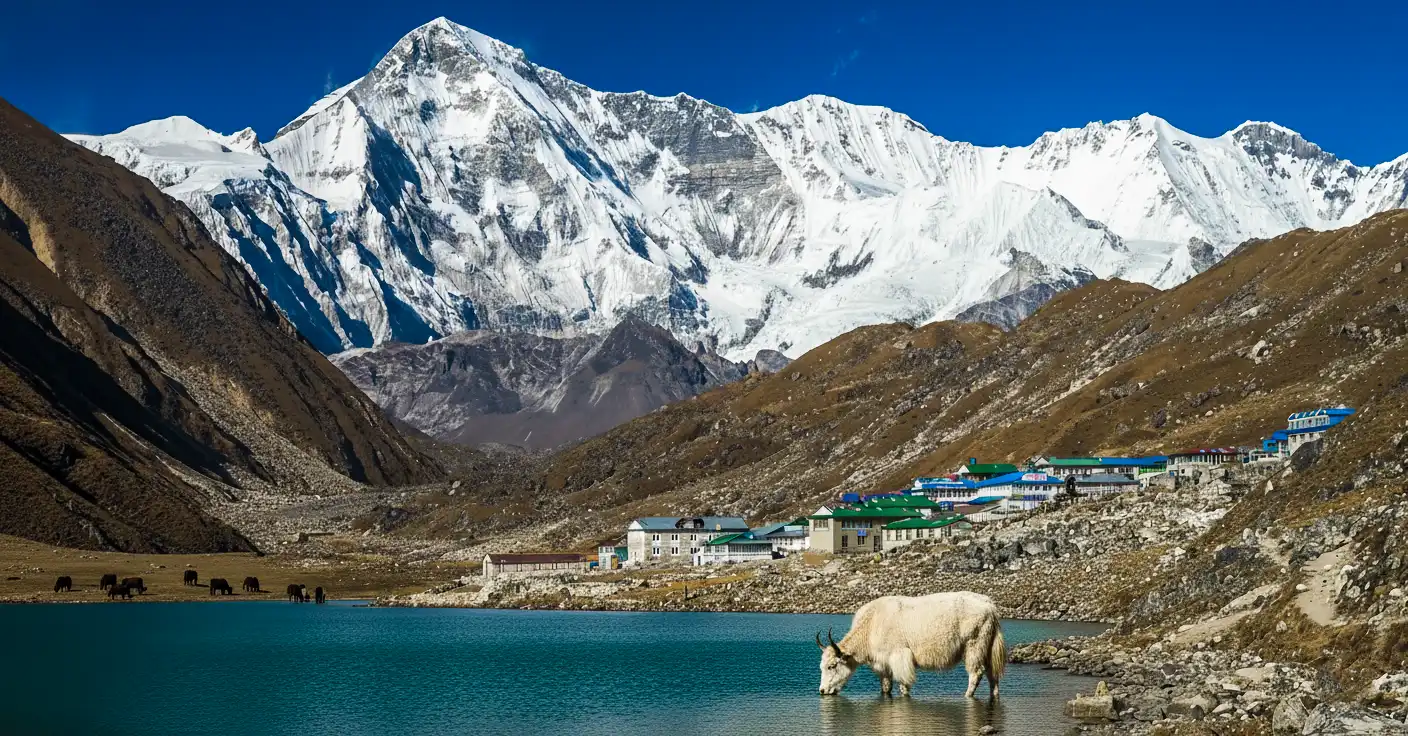
Discover the serene Gokyo Valley and its string of brilliant turquoise, high‑altitude lakes set beneath the towering peaks.
Stand at Everest Base Camp (5,364m)
Fulfill the classic dream of reaching Everest Base Camp—the legendary staging ground for summit expeditions.
Summit Three Himalayan Viewpoints (Chhukung Ri 5,546m • Kala Patthar 5,545m • Gokyo Ri 5,357m)
Ascend three non‑technical peaks for unparalleled 360‑degree vistas across the Khumbu range and beyond.
Gallery
Outline Itinerary of Everest Three High Passes Trek 19 Days
Arrival at Kathmandu Airport.
Upon arrival, you will be met and transferred to your hotel to rest and prepare for the ultimate Everest adventure.
Fly to Lukla (2,860m) and Trek to Phakding (2,610m).
An early morning scenic flight to Lukla, followed by a relatively easy introductory trek to Phakding.
Trek from Phakding to Namche Bazaar (3,446m).
A challenging day of trekking, ascending to the vibrant Sherpa capital and gateway to the high Himalayas.
Acclimatization Day in Namche Bazaar.
Explore the town and hike to Khumjung Village and the Everest View Hotel (3,880m) for stunning panoramic views.
Trek from Namche Bazaar to Tengboche (3,860m).
A scenic trek to the spiritual heart of the Khumbu, home to the famous Tengboche Monastery.
Trek from Tengboche to Dingboche (4,360m).
Climb to the high-altitude village of Dingboche, with impressive views of Ama Dablam.
Acclimatization Day in Dingboche (4,360m).
A crucial rest day to adapt to the altitude, with an optional acclimatization hike for better views.
Trek to Chhukung (4,750m) and Climb Chhukung Ri (5,546m).
A short trek to Chhukung followed by a challenging climb of Chhukung Ri for acclimatization and incredible views.
Cross Kongma La Pass (5,535m) and Trek to Lobuche (4,940m).
A long and demanding day as you conquer the first of the three high passes.
Trek to Gorakshep (5,170m) and visit Everest Base Camp (5,364m).
Walk on glacial moraine to Gorakshep and then achieve the dream of standing at the foot of Mount Everest.
Hike Kala Patthar (5,545m) and Trek to Dzongla (4,830m).
Witness a spectacular Everest sunrise from Kala Patthar, then trek to the small settlement of Dzongla.
Cross Cho La Pass (5,368m) and Trek to Thagnak (4,700m).
A challenging day crossing the icy Cho La Pass, which often requires crampons, before descending to Thagnak.
Trek from Thagnak to Gokyo Lake (4,800m).
A shorter trek across the Ngozumpa Glacier to reach the stunning turquoise lakes of Gokyo.
Rest Day in Gokyo, Climb Gokyo Ri (5,357m), and Explore Lakes.
A full day to explore the magnificent Gokyo Valley, climbing Gokyo Ri for panoramic views and visiting the 4th and 5th lakes.
Cross Renjo La Pass (5,360m) and Trek to Marlung (4,210m).
Conquer the final pass, Renjo La, for breathtaking views of Everest and the Gokyo Valley, followed by a long descent.
Trek from Marlung to Namche Bazaar (3,446m).
Follow a traditional trading route down the Bhote Koshi valley back to the familiar comforts of Namche Bazaar.
Trek from Namche Bazaar to Lukla (2,860m).
Your final day of trekking, a long descent back to Lukla where you can celebrate the completion of your epic journey.
Fly from Lukla to Kathmandu.
Take an early morning flight back to Kathmandu and enjoy a well-deserved rest and celebration.
Departure from Kathmandu Airport.
Transfer to the airport for your final departure, taking with you the memories of an incredible achievement.
Difficulty & Fitness Requirements
Physical Requirements
- • Good cardiovascular fitness
- • Ability to walk 6-8 hours daily
- • Previous trekking experience recommended
- • No serious medical conditions
Altitude Considerations
- • Gradual acclimatization schedule
- • Maximum altitude: 5,550m
- • Professional altitude monitoring
- • Emergency evacuation coverage
Introduction
For trekkers with a true thirst for adventure, the Everest Three High Passes Trek represents the ultimate challenge and the most comprehensive journey through the Khumbu Valley. This demanding trek is not merely a walk to a destination; it's a complete circuit of the Everest region, linking the classic Everest Base Camp trail with the pristine, turquoise lakes of the Gokyo Valley. It is an achievement reserved for those who wish to see everything the region has to offer, away from the more beaten paths.
Your grand adventure is defined by the conquest of three formidable alpine passes: the rugged Kongma La Pass (5,535m), the icy Cho La Pass (5,420m), and the breathtakingly scenic Renjo La Pass (5,360m). Each pass presents its own unique challenge and rewards you with spectacular, hard-earned vistas that few trekkers ever witness. This journey is a true test of endurance and a celebration of high-altitude trekking.
The 20-day itinerary begins with a thrilling flight into Lukla, the gateway to the Khumbu. From there, you will follow the classic trail, ascending through lush forests and traditional Sherpa villages to the vibrant hub of Namche Bazaar. Along the way, you will enter the Sagarmatha National Park, a UNESCO World Heritage Site. After acclimatizing in Namche and exploring the charming Khumjung village, you will head east towards Dingboche, passing the iconic Tengboche Monastery.
The trek then deviates from the standard EBC route as you prepare to tackle the first pass. After crossing the mighty Kongma La, you will rejoin the main trail to visit the legendary Everest Base Camp and summit Kala Patthar (5,545m) for its world-famous sunrise views over Mount Everest.
From there, the adventure continues west. You will cross the glacial Cho La Pass to enter the stunningly beautiful Gokyo Valley. Here, you will spend a full day exploring the chain of sacred, emerald-green Gokyo Lakes and climbing Gokyo Ri (5,357m) for another incredible panoramic viewpoint that includes Everest, Lhotse, and the colossal Cho Oyu.
The final leg of this epic circuit involves crossing the Renjo La Pass, which offers arguably the most spectacular views of the entire trek, looking back over the Gokyo Lakes with Mount Everest as the backdrop. Finally, you will descend through traditional Sherpa villages on a quiet trail, making your way south to Namche and eventually back to Lukla, having completed a full and rewarding loop of the Everest region.
Given that the Everest Three High Passes Trek is one of the toughest adventure treks in Nepal, it requires excellent physical condition and mental fortitude. Previous high-altitude trekking experience is highly recommended. The best and safest times to undertake this journey are during the stable weather windows of the spring (March–May) and autumn (September–November) seasons.
Detailed Itinerary
Follow our carefully crafted 19-day journey to Everest Three High Passes, designed for optimal acclimatization and unforgettable experiences.
Your grand Himalayan adventure begins the moment you land at Tribhuvan International Airport (TIA), where the air is filled with a unique blend of urban energy and spiritual calm. A representative will be there to greet you with a warm welcome and provide a private transfer to your hotel. After settling in, you can rest and recover from your flight or take a stroll to soak in the vibrant atmosphere of the city. In the evening, you will meet your expert guide and fellow trek members for a crucial pre-trek briefing. This session will cover the day-by-day plan, safety protocols, and a gear check, ensuring you are fully prepared for the ultimate Everest challenge that lies ahead.
Important Note
During peak seasons (spring and autumn), flights to Lukla may be redirected to Manthali Airport in Ramechhap due to air traffic congestion in Kathmandu. This requires a 4-5 hour drive from Kathmandu, often starting around midnight. Please plan your arrival in Kathmandu accordingly.
Key Highlights
- • Airport pickup and private hotel transfer
- • Pre‑trek briefing and safety overview
- • Gear check and last‑minute prep
- • Optional evening stroll in Kathmandu
Daily Schedule
An early morning start takes you to the domestic airport for one of the world's most scenic and thrilling flights. The 35-minute journey to Lukla aboard a small aircraft offers breathtaking panoramas of the Himalayan range. Upon landing on its famous, upward-sloping airstrip, you'll feel the crisp mountain air and the buzz of excitement. After meeting your full trekking crew and enjoying a hearty breakfast, your adventure on foot begins. Today's trek is a relatively gentle introduction, descending through forests and Sherpa villages along the beautiful Dudh Kosi River, offering fantastic views and a peaceful transition into the rhythm of the trail before reaching the village of Phakding.
Key Highlights
- • Scenic flight to Lukla
- • Gentle riverside walk along Dudh Kosi
- • Sherpa village culture
- • Soft acclimatization start
Daily Schedule
Prepare for a challenging but rewarding day as the trail ascends significantly to Namche Bazaar, the bustling gateway to the high Himalayas. The path continues to trace the Dudh Kosi River, which you will cross several times on high, swaying suspension bridges, including the famous Hillary Suspension Bridge. After entering the protected Sagarmatha National Park, the trail climbs relentlessly through a dense pine forest for the final couple of hours. As you emerge from the trees, the vibrant, amphitheater-shaped town of Namche Bazaar reveals itself, a welcome sight and the commercial and cultural heart of the Khumbu region.
Key Highlights
- • Sagarmatha National Park entry
- • Hillary Suspension Bridge crossing
- • First Everest views (weather‑permitting)
- • Arrival at Namche Bazaar
Daily Schedule
Today is a crucial acclimatization day, essential for adapting to the high altitude. To aid this process, you will embark on a day hike following the principle of 'climb high, sleep low.' After breakfast, you will hike up to the traditional Sherpa settlement of Khumjung, often called the 'Green Valley,' and visit the famous Hotel Everest View. From its terrace, you are rewarded with your first breathtaking panoramic views of Mount Everest, Lhotse, and the stunning Ama Dablam. This activity not only aids acclimatization but also offers a deep dive into the local culture and landscapes before you return to Namche for the afternoon.
Key Highlights
- • Hotel Everest View terrace panorama
- • Khumjung village and monastery
- • Ama Dablam, Everest and Lhotse vistas
- • Acclimatization: climb high, sleep low
Daily Schedule
The trek to Tengboche is a spectacular journey filled with some of the most iconic mountain views in the world. The initial trail is a relatively easy contour path with stunning vistas of Everest and Ama Dablam. After a steep descent to the river at Phunki Tenga, the trail climbs relentlessly for two hours through a beautiful forest of rhododendron and juniper. Your destination is the ridgetop village of Tengboche, home to the largest and most significant monastery in the Khumbu. Visiting this spiritual center, with its serene atmosphere and backdrop of Himalayan giants, is a truly profound experience.
Key Highlights
- • Iconic views of Everest and Ama Dablam
- • Forest walk to Phunki Tenga
- • Steady climb to Tengboche ridge
- • Visit Tengboche Monastery
Daily Schedule
Today's trail takes you above the treeline into the high-altitude alpine zone. After descending through a forest to cross the Imja Khola, the path gradually climbs towards Pangboche, the highest year-round settlement in the valley. As you continue, the landscape becomes more stark and dramatic, with breathtaking views of surrounding peaks, especially the magnificent Ama Dablam. You will eventually arrive in the picturesque village of Dingboche, a collection of stone-walled fields nestled under the imposing faces of some of the world's most beautiful mountains.
Key Highlights
- • Cross Imja Khola
- • Pass through Pangboche
- • Enter high‑alpine terrain
- • Arrive in Dingboche with mountain views
Daily Schedule
This is your second and final scheduled acclimatization day, and it is vital for ensuring you are well-prepared for the extreme altitudes of the three high passes. Dingboche is an ideal location to rest, adapt, and explore. To aid acclimatization, you can take a rewarding hike up the ridge behind the village for spectacular views of the entire valley, including a glimpse of Makalu, the world's fifth-highest peak. This crucial rest day significantly increases your chances of a safe and successful trek over the high passes.
Key Highlights
- • Gentle ridge hike above Dingboche
- • Views toward Makalu and Ama Dablam
- • Focused acclimatization day
- • Rest and preparation for high passes
Daily Schedule
A relatively short trek today takes you further up the valley to the small, seasonal settlement of Chhukung. This village serves as the base for climbing Island Peak and, for our purposes, as the staging point for crossing the Kongma La. In the afternoon, you will embark on a challenging but highly rewarding climb of Chhukung Ri. This non-technical peak offers phenomenal, close-up panoramic views of Lhotse, Nuptse, and Ama Dablam, and serves as excellent final preparation for the high passes.
Key Highlights
- • Short trek to Chhukung
- • Climb Chhukung Ri (5,546m)
- • Close‑up views of Lhotse and Nuptse
- • Stage for Kongma La crossing
Daily Schedule
This is a long, strenuous, and rewarding day as you conquer the first and highest of the three passes. An early start is essential as there are no teahouses along the remote and rugged trail. The ascent to the prayer-flag-adorned summit of Kongma La is challenging, but the views over the surrounding glacial landscapes are truly breathtaking. The descent is equally demanding, involving careful navigation across the loose scree of the Khumbu Glacier's moraine before you finally reach the small settlement of Lobuche.
Important Note
Kongma La Pass (5,535m) is the highest of the three passes and requires excellent physical fitness and acclimatization. The trail is remote with no facilities, so carry sufficient water and snacks. Weather conditions can change rapidly at this altitude—your guide will assess conditions and may adjust the schedule if necessary for safety.
Key Highlights
- • Cross Kongma La Pass (5,535m)
- • Remote, rugged high‑alpine trail
- • Vast glacial and moraine scenery
- • Descend to Lobuche
Daily Schedule
Today, you will achieve the classic and unmissable milestone of reaching Everest Base Camp. The trail follows the undulating lateral moraine of the Khumbu Glacier to Gorakshep, a small collection of lodges on a frozen lakebed and the last settlement before EBC. After dropping off your gear and refueling with lunch, you will make the final push to your goal. Standing at the foot of the world's tallest mountain, amidst the prayer flags, colorful tents (in season), and the formidable Khumbu Icefall, is an awe-inspiring and unforgettable experience.
Key Highlights
- • Trek to Gorakshep
- • Reach Everest Base Camp (5,364m)
- • Khumbu Icefall vistas
- • Return to Gorakshep
Daily Schedule
A pre-dawn start is required for the steep, cold ascent of Kala Patthar. This famous viewpoint offers the most iconic and breathtaking sunrise views of Mount Everest, with the first light of day illuminating its summit pyramid. After capturing some once-in-a-lifetime photos, you will descend back to Gorakshep for a well-earned breakfast. The day's journey then continues with a trek down and across a different valley to the isolated hamlet of Dzongla, positioning you perfectly for tomorrow's Cho La Pass crossing.
Key Highlights
- • Kala Patthar sunrise viewpoint
- • 360° Everest panorama
- • Trek to Dzongla
- • Positioning for Cho La
Daily Schedule
Prepare for another strenuous but spectacular day as you cross the second pass. The ascent to Cho La Pass is steep and often involves traversing a small glacier at the top, which may require microspikes depending on conditions. The trail is demanding, but the dramatic views of jagged peaks from the prayer-flag-draped summit are your reward. A careful, steep descent brings you down to the small settlement of Thagnak, located in a valley at the eastern edge of the mighty Ngozumpa Glacier.
Important Note
Cho La Pass (5,420m) involves crossing a glacier and is the most technical of the three passes. Microspikes or crampons are often required, especially in winter or early spring. The glacier section can be icy and slippery—follow your guide's instructions carefully. Weather conditions are critical; the pass may be impassable in poor weather, and your guide may delay the crossing for safety.
Key Highlights
- • Cross Cho La Pass (~5,420m)
- • Short glacier traverse
- • Steep descent to Thagnak
- • Dramatic high‑pass scenery
Daily Schedule
Today is a shorter but incredibly scenic and unique day. The main challenge is navigating the trail across the vast, rubble-strewn expanse of the Ngozumpa Glacier—the largest glacier in the Nepal Himalayas. After successfully traversing the rocky moraine, you are rewarded with the sudden and stunning sight of the first of the brilliant turquoise Gokyo Lakes. A short walk along the lakeshore brings you to the beautiful village of Gokyo, one of the most picturesque locations in the Everest region.
Key Highlights
- • Cross Ngozumpa Glacier
- • Arrive at turquoise Gokyo Lakes
- • Lakeshore village of Gokyo
- • Shorter recovery day
Daily Schedule
This well-deserved rest day in the beautiful Gokyo Valley is a major highlight of the entire trek. In the morning, you will make the steep climb to the summit of Gokyo Ri for what is arguably the best panoramic view in the Himalayas, encompassing four 8,000-meter peaks: Everest, Lhotse, Makalu, and Cho Oyu. In the afternoon, you can explore further up the pristine valley to the sacred 4th and 5th Gokyo Lakes, reaching the base of the mighty Cho Oyu.
Key Highlights
- • Climb Gokyo Ri (5,357m)
- • View Everest, Lhotse, Makalu, Cho Oyu
- • Explore 4th and 5th lakes
- • Sacred valley scenery
Daily Schedule
Today you conquer the final pass of your epic journey. The ascent to Renjo La is long and steady, and looking back from the summit provides the most breathtaking panorama of the entire trek, with a stunning view over the Gokyo Lakes and the Everest massif. The descent on the other side is long and steep, leading you down into the quiet, remote Bhote Koshi valley and the traditional Sherpa village of Marlung.
Important Note
Renjo La Pass (5,360m) is the final high pass of your circuit. While less technical than Cho La, it still requires careful navigation and good weather conditions. The descent is long and can be challenging on tired legs. Early morning starts are essential to avoid afternoon weather changes. After completing all three passes, you've achieved a significant mountaineering accomplishment!
Key Highlights
- • Cross Renjo La Pass (5,360m)
- • Best panorama over Gokyo Lakes
- • Long descent to Bhote Koshi valley
- • Overnight in Marlung
Daily Schedule
The trail today follows a historic trade route that has been used by Tibetan traders for centuries, offering a different cultural feel from the main Khumbu valley. The descent is much easier than the previous days' treks, passing through several traditional Sherpa villages like Thame, home to a famous monastery. You will feel a great sense of accomplishment as you re-enter the familiar, bustling streets of Namche Bazaar.
Key Highlights
- • Follow historic trade route
- • Visit/Pass Thame monastery
- • Return to Namche Bazaar
- • Lower‑altitude comfort
Daily Schedule
This is your final day of trekking, a long but satisfying journey back to Lukla. The trail descends steeply from Namche before leveling out to follow the Dudh Kosi River through familiar villages. Though long, the sense of accomplishment grows with every step. You will arrive back in Lukla in the afternoon, where you can finally put your feet up and celebrate the successful completion of your epic journey with your guide, porters, and fellow trekkers.
Key Highlights
- • Final trekking day to Lukla
- • Forests and suspension bridges
- • Celebrate trek completion
- • Farewell with crew
Daily Schedule
An early morning flight takes you back to Kathmandu, providing one last, memorable aerial view of the majestic Himalayas. Upon arrival, you will be transferred back to your hotel for a well-deserved hot shower and rest. In the evening, we will host a celebratory farewell dinner at an authentic Nepalese restaurant, complete with a cultural performance, to honor your incredible achievement.
Key Highlights
- • Morning flight to Kathmandu
- • Aerial views of the Himalaya
- • Rest and hot shower
- • Farewell cultural dinner
Daily Schedule
Your incredible adventure in Nepal officially comes to an end today. After breakfast, a representative will transfer you to Tribhuvan International Airport approximately three hours before your scheduled flight. You will head home with a lifetime of memories and, no doubt, already planning your next adventure in this wonderful country.
Key Highlights
- • Airport transfer
- • Final departure
- • Lifetime memories
- • Plans for the next adventure
Daily Schedule
What Your Trekking Package Covers
What's Included
Arrival & Departure Services
Airport Transportation: Upon your arrival at Kathmandu's airport, a dedicated representative will be there to greet you and provide a safe transfer to your hotel to begin your journey. We also provide your transfer back to the airport for your final departure.
Accommodation & Meals
- • Hotel Stays in Kathmandu: Your package includes a two-night stay in a comfortable, 3-star standard hotel in Kathmandu, with a daily breakfast to start your day right.
- • Trekking Accommodation: Throughout the trek, you will have cozy and welcoming lodging arranged in traditional teahouses and lodges, providing a warm place to rest after each day's hike.
- • Farewell Dinner Celebration: To commemorate your incredible journey, you will be treated to a special farewell dinner at an authentic Nepalese restaurant, complete with a vibrant cultural performance.
Flights & Transportation
- • Domestic Flights: Your round-trip flight ticket from Kathmandu to the Lukla airstrip (or Ramechhap to Lukla) is included, getting you to the starting point of your trek.
- • Airport Transfers in Kathmandu: We will arrange all necessary transfers between your hotel and the domestic airport, ensuring a comfortable and stress-free experience.
Permits, Fees & Official Arrangements
- • All Necessary Permits: We will arrange and cover the cost of all required trekking permits, including the Khumbu Pasang Lhamu Rural Municipality Fee and the Sagarmatha National Park Entry Permit.
- • TIMS Card: Your Trekkers' Information Management System (TIMS) permit, a mandatory requirement for trekking in Nepal, will be provided.
- • Paperwork & Taxes: All essential government taxes, official fees, and necessary paperwork will be taken care of by our team, ensuring a seamless and hassle-free experience.
Trekking Supports
- • Professional Guide: An experienced, knowledgeable, and friendly licensed guide who will lead you on the trail, offering valuable insights into the local culture and ensuring your safety and enjoyment.
- • Dedicated Porter: A porter will be provided to carry your main luggage. To ensure the safety and well-being of our porters, we kindly request that you limit your packed duffle bag to a maximum of 7 kg per person.
- • Trekking Duffle Bag: A durable duffle bag will be provided for you to use for packing your main luggage during the trek.
Safety & Medical Supplies
First-Aid Kit: Your guide will carry a basic first-aid kit for minor medical issues that may arise. However, we highly recommend that you bring your own personal supply of any specific medications you may need for your own security and comfort.
Memorable Extras
Trekking Completion Certificate: Upon successfully completing the trek, you will be awarded a certificate to commemorate your remarkable achievement.
What Is Not Covered in Your Package
Travel & Entry Formalities
- • Nepal Visa Fee: The fee for your Nepal visa, which can be easily obtained upon your arrival at the airport in Kathmandu, is not included.
- • International Flights: The cost of your international airfare to and from Nepal is not part of the package and must be arranged separately.
Insurance
Travel and Rescue Insurance: It is mandatory for you to have your own comprehensive travel insurance that covers high-altitude trekking and emergency helicopter rescue. This is not included in the package.
Food & Personal Expenses
- • Meals in Kathmandu: While breakfast at your hotel is included, lunches and dinners in Kathmandu are not covered.
- • Meals on the Trek: Meals on the trail (breakfast, lunch, and dinner) or any extra food, snacks, or drinks you may wish will not be provided during the trekking portion of your adventure.
- • Personal Expenses: Expenses of a personal nature are not covered. This includes the cost of bottled or boiled water, alcoholic and soft drinks, hot showers at teahouses, charging your electronic devices, laundry, and any other personal items.
Other Potential Expenses
- • Tips: Tipping your guide and porter is a customary and highly appreciated gesture at the end of the trek and is not included in the package price.
- • Extra Hotel Nights in Kathmandu: Additional hotel stays in Kathmandu due to early arrival, late departure, or returning earlier from the trek than planned are not covered.
- • Unexpected Mountain Expenses: Any additional costs incurred in the mountains due to unforeseen circumstances like bad weather or flight delays are your responsibility.
Departure Dates
Pick Your Suitable Date
Book a Private Trip
Private & Group Discount Pricing
What is your group size?
Select your group size to see pricing
Route Map
Interactive route map will be displayed here...
Essential Packing Gear List
Choosing the 19-day Everest Three High Passes Trek in Nepal means stepping into a once-in-a-lifetime adventure filled with breathtaking landscapes and unforgettable experiences. To make your journey as smooth and enjoyable as possible, having the right gear is essential. That's why we've created a carefully crafted packing list of must-have items to ensure you're fully prepared for this incredible trek.
Travel Documents
Backpack
Trekking Clothing and Shoes
Other Clothing and Accessories
Mandatory Items
Personal Hygiene
Optional Items
Equipment Note:
Please note: There is no need to carry heavy gear such as sleeping bags, down jackets, or trekking poles from home. High-quality to standard-quality equipment can be easily rented or purchased in Kathmandu and Namche.
You'll find items from renowned international brands like The North Face, Sherpa Adventure, Marmot, Mountain Hardwear, Black Yak, Karma Gear, as well as trusted local brands such as Goldstar and other locally made products.
Rental Cost:
Sleeping Bag & Down Jacket (suitable for -10°C to -20°C): USD 1.5 per piece, per day
Is the Everest Three High Passes Trek Very Hard?
Yes, the Everest Three High Passes Trek is extremely challenging and is considered one of the most demanding treks in the Everest region. While it doesn't require technical climbing skills, crossing three high-altitude passes (Kongma La at 5,535m, Cho La at 5,420m, and Renjo La at 5,360m) requires exceptional physical fitness, prior high-altitude trekking experience, and strong mental resilience. This trek is not suitable for beginners and should only be attempted by experienced trekkers who have completed at least one high-altitude trek reaching 5,000m or above.
Key challenges you'll face include:
Extreme Altitude
The trek reaches altitudes up to 5,545m at Kala Patthar, with extended time spent above 5,000 meters. The three high passes are all above 5,360m, where oxygen levels are roughly half of sea level. This requires excellent acclimatization and experience with high-altitude trekking to recognize and manage altitude sickness symptoms.
Duration and Distance
The complete circuit covers approximately 160-180 km (about 100-112 miles) over 19 days. This means you'll be walking for 5 to 8 hours on most days, with some longer days during pass crossings.
Technical Pass Crossings
Crossing three high-altitude passes involves navigating steep, icy terrain, potentially crossing glaciers (especially Cho La Pass), and requires careful route-finding. Cho La Pass often requires microspikes or crampons. The passes are remote with no facilities, requiring self-sufficiency and experience in challenging mountain conditions.
Mental Fortitude
The combination of physical exertion, basic living conditions, and being away from home can be mentally taxing. A positive and resilient mindset is crucial.
Who Can Do It?
The Everest Three High Passes Trek is only suitable for experienced high-altitude trekkers who have completed at least one previous trek reaching 5,000m or above. This is not a trek for beginners or first-time trekkers in Nepal.
Essential requirements include:
- Prior high-altitude trekking experience (5,000m+)
- Experience crossing high-altitude passes, especially those involving snow/ice
- Excellent physical fitness and endurance
- Strong mental resilience for challenging conditions
- Understanding of altitude sickness recognition and management
If you're new to high-altitude trekking, we recommend starting with the standard Everest Base Camp trek or the Everest Cho La Pass trek (which crosses one pass) before attempting all three passes.
Why Choose a 19-Day Everest Three High Passes Trek?
The 19-day Everest Three High Passes Trek is the ultimate comprehensive journey through the Khumbu region, offering the most complete and challenging experience available. Here's why this extended itinerary is essential for conquering all three high passes:
Essential Acclimatization for High Passes
Crossing three high-altitude passes (Kongma La at 5,535m, Cho La at 5,420m, and Renjo La at 5,360m) requires exceptional acclimatization. The 19-day itinerary includes strategic rest days in Namche Bazaar, Dingboche, and other key locations, allowing your body to adapt to extreme altitudes and significantly reducing the risk of Acute Mountain Sickness (AMS) when tackling these challenging passes.
Complete Circuit Experience
Unlike standard treks that follow the same route up and down, the Three High Passes Trek creates a complete circuit of the Everest region. You'll experience both the classic Everest Base Camp route and the pristine Gokyo Valley, crossing remote passes that link these areas. This comprehensive journey ensures you see everything the Khumbu has to offer without retracing your steps.
Recovery Time Between Passes
The extended itinerary provides crucial recovery time between each high pass crossing. After conquering Kongma La, you'll have time to rest and recover before tackling Cho La Pass. Similarly, after Cho La, you'll have a rest day in Gokyo before the final Renjo La crossing. This pacing is essential for maintaining physical and mental strength throughout the journey.
Weather Buffer Days
High-altitude pass crossings are highly weather-dependent. The 19-day itinerary includes buffer time that allows for flexibility if weather conditions are unfavorable. Your guide can adjust the schedule to wait for optimal conditions, ensuring safer and more enjoyable pass crossings.
Ultimate Achievement for Experienced Trekkers
Completing all three high passes in one trek is a significant mountaineering achievement. The 19-day itinerary ensures you have the time, acclimatization, and support needed to successfully complete this ultimate challenge, making it a truly memorable and rewarding experience.
A Typical Day on the Trek
Your days on the Three High Passes Trek will follow a rhythm that connects you with the natural landscape and the local culture.
Mornings
You'll wake up early to the sounds of the teahouse coming to life. After a hearty breakfast, you'll pack your daypack and set out on the trail, typically walking for 4 to 6 hours each day.
The Trail
The scenery changes dramatically as you ascend. In the lower regions, you'll be accompanied by the Dudh Koshi River and walk through lush rhododendron and coniferous forests. As you climb higher, the landscape transforms into a dramatic realm of rock and ice, with sparse tundra vegetation.
Lunch and Breaks
Your trek will be punctuated by a lunch break of about an hour and shorter stops to rest, take photos, and soak in the incredible views.
Evenings
You'll arrive at your destination for the day in the late afternoon. The evenings are for relaxing, enjoying a delicious dinner at a Sherpa-run teahouse, and stargazing in the clear mountain sky.
Food and Accommodation
In Kathmandu
You can expect to stay in a comfortable three-star hotel with double occupancy rooms. Breakfast will be provided.
On the Trek
You'll stay in mountain lodges, commonly known as teahouses. The rooms are basic, typically with two beds, but the hospitality is warm and welcoming.
Meals
During the trek, your package will generally include breakfast, lunch, and dinner, which you'll have at the teahouses. The menu offers a variety of options, from traditional Nepali dishes like dal bhat (rice and lentils) to pasta, pizza, and Tibetan bread. The food choices become simpler the higher you go.
Showers
Hot showers may not always be available, especially at higher altitudes, and there is usually an extra charge for them. However, boiled drinking water will be accessible.
Staying Connected and Charged
Internet/WiFi
You can stay connected during your trek. In larger villages like Lukla, Phakding, and Namche Bazaar, you can purchase unlimited WiFi access for a fee. Everest Link WiFi cards with data packages are also available for purchase in Namche. You can also use 4G data packages from Ncell or NTC by getting a local SIM card.
Charging
Electricity is available in the villages, often supplemented by solar power. You can charge your electronic devices, though there is usually a small fee for this service.
Transportation
Your tour package will typically include all necessary transportation:
- Airport transfers in a private vehicle.
- Round-trip flights between Kathmandu and Lukla.
- If flights are diverted to Ramechhap Airport (a common occurrence during peak season), a private vehicle will be arranged for the drive between Kathmandu and Ramechhap.
Altitude Sickness and Acclimatization
As you'll be trekking to elevations above 5,000 meters, it's crucial to be aware of Acute Mountain Sickness (AMS).
Symptoms
The primary symptoms of AMS include headache, dizziness, nausea, vomiting, loss of appetite, fatigue, and difficulty sleeping. These symptoms usually subside within 12 to 24 hours.
If they persist, the only cure is to descend to a lower altitude.
Prevention
While AMS cannot be 100% prevented, the risk can be significantly reduced by:
- • Slow and Steady Ascent: A gradual climb with acclimatization days
- • Hydration: Drink plenty of water, at least 4 liters per day
- • Diamox: Consider talking to your doctor about using Diamox
Getting Ready and Staying Safe
Proper preparation is key to a successful and enjoyable Three High Passes Trek.
Physical Fitness
Since this is a moderately challenging, high-altitude trek, you need to be physically fit. If you lead a sedentary lifestyle, it's recommended to start training at least 3 to 6 months before your trip.
Recommended Training:
First Aid Knowledge
It's beneficial to have a basic understanding of first aid for minor injuries.
Mental Preparation
Research the weather, terrain, and landscape of the Everest region to mentally prepare for the journey ahead.
Consult Your Doctor
If you have any pre-existing health conditions, consult your doctor before booking the trek.
Travel Insurance
Comprehensive travel insurance is mandatory for the Three High Passes Trek. Your insurance policy must cover:
- Medical expenses and emergency evacuation up to an altitude of at least 6,000 meters.
- Trip cancellation and interruption.
- Loss or theft of baggage and equipment.
Booking Your Trek
Review the Details
Before booking, carefully read through the entire trip itinerary, including what's included and excluded.
Choose Your Dates
Select your preferred departure date from the available options.
Payment
Proceed with the payment to reserve your spot. Keep in mind that the initial deposit is typically non-refundable.
Confirmation
Once your booking is confirmed, you'll receive a detailed itinerary, a gear list, and other essential information to help you prepare.
Permits and Regulations
Guided Trekking is Mandatory
As of recent regulations in Nepal, independent trekking is no longer permitted in the Everest region. You must book your trek through a registered trekking agency and be accompanied by a licensed guide.
Required Permits
Your trekking agency will obtain the necessary permits on your behalf. These include:
- • Khumbu Pasang Lhamu Rural Municipality Permit
- • Sagarmatha National Park Entry Permit
Frequently Asked Questions
Yes, you can extend your Everest Three High Passes trek. While the standard 19-day itinerary is carefully designed to provide adequate acclimatization and recovery time, adding extra days can enhance your experience, especially if you want more time to explore or need additional acclimatization. We can arrange for additional days at strategic points along the circuit.
Popular extension options include:
- Additional Acclimatization Days: Spending extra days in key locations like Namche Bazaar, Dingboche, or Lobuche can be beneficial, especially if you're feeling the effects of altitude. This allows for scenic day hikes to surrounding viewpoints, such as Khumjung and Khunde near Namche, or Nagarjun Hill from Dingboche for stunning views of Makalu.
- Weather Buffer Days: Adding extra days before high pass crossings (especially Cho La Pass) provides flexibility to wait for optimal weather conditions. This is crucial for safety, as pass crossings can be dangerous in poor weather.
- Extended Exploration: You can add time to fully explore the Gokyo Valley, spend an extra day at Gokyo Lakes, or take additional side trips. Some trekkers also choose to add a day in Thame to experience more remote Sherpa culture.
- Recovery and Buffer: Adding a rest day after completing all three passes or before the flight out of Lukla can be beneficial. An extra day in Lukla also serves as a valuable buffer in case of flight delays or cancellations, which are common due to weather.
- Kathmandu Exploration: You can also extend your stay in Kathmandu to explore its rich cultural heritage, including its numerous UNESCO World Heritage Sites, or to embark on shorter treks in the hills surrounding the valley.
Flights to the Tenzing-Hillary Airport in Lukla, the gateway to the Everest region, are operated by local airlines such as Sita Air, Tara Air, and Yeti Airlines.
Key points regarding these flights:
- Schedule: Flights typically operate in the early morning, from around 6:30 AM to noon. This is because the weather in the Himalayas is generally most stable in the morning, with winds and cloud cover increasing as the day progresses.
- Departure from Ramechhap: During peak trekking seasons (spring and autumn), to ease air traffic congestion at Kathmandu's Tribhuvan International Airport, most flights to Lukla are diverted to operate from Ramechhap Airport. This requires a 4-5 hour drive from Kathmandu, usually in the very early morning before your flight. It is crucial to confirm the departure airport with your trekking agency beforehand.
- Cancellations and Delays: The weather in the mountains is unpredictable, and flights to Lukla are frequently delayed or canceled with little notice. For the Three High Passes Trek, the 19-day itinerary already includes buffer time, but it's wise to have additional flexibility in your schedule to account for potential flight delays, especially at the beginning and end of your trek.
The Everest Three High Passes Trek is an extremely challenging adventure that involves crossing three high-altitude passes (Kongma La at 5,535m, Cho La at 5,420m, and Renjo La at 5,360m). This trek is generally not recommended for children due to its technical difficulty, extreme altitude, and physical demands.
Important considerations:
- Extreme Altitude and Technical Challenges: The three high passes require crossing steep, icy, and potentially dangerous terrain. Cho La Pass, in particular, can involve glacier crossings and requires careful navigation. These conditions are not suitable for children.
- Physical Demands: The trek involves long days of 6-8 hours of walking, often at altitudes above 5,000 meters. The cumulative effect of crossing three passes requires exceptional physical fitness and endurance that most children do not possess.
- Altitude Sickness Risk: Children are more susceptible to Acute Mountain Sickness (AMS) and may struggle to communicate symptoms. The extreme altitudes reached on this trek (up to 5,545m at Kala Patthar) pose significant health risks for children.
- Alternative Options: If you're traveling with children, we recommend the standard Everest Base Camp trek or shorter treks in the lower elevations of the Khumbu region. These provide a safer and more enjoyable experience for young trekkers while still offering incredible mountain views and cultural experiences.
Weather conditions are especially critical for the Three High Passes Trek, as safe pass crossings depend on stable weather. The timing of your trek can significantly impact your ability to complete all three passes safely. There are two primary trekking seasons:
- Post-Monsoon (October - November): This is the optimal time for the Three High Passes Trek. The monsoon rains have cleared the dust from the air, offering crystal-clear skies and magnificent views. The weather is stable and dry, with minimal precipitation, making pass crossings safer. However, temperatures can drop significantly at high altitudes, especially in November. Early morning starts are essential for pass crossings before afternoon winds pick up.
- Pre-Monsoon (March - May): This is the second-best season. The weather is generally stable, though afternoon clouds and occasional snowfall are possible. Cho La Pass may still have significant snow and ice in early March, requiring extra caution. May offers warmer temperatures but increasing haze. This season also attracts climbers attempting to summit Everest, offering a unique chance to see Base Camp in full swing.
- Winter (December - February): While possible, winter trekking is extremely challenging. Passes are often covered in deep snow and ice, making crossings dangerous. Temperatures can drop to -20°C or lower at high altitudes. Only experienced mountaineers should attempt this trek in winter.
- Monsoon (June - September): Not recommended. Heavy rainfall, landslides, leeches, and poor visibility make pass crossings extremely dangerous and the overall experience unpleasant.
The Everest Three High Passes Trek is not recommended for first-time trekkers in Nepal. This is an extremely challenging trek that requires significant high-altitude trekking experience, excellent physical fitness, and strong mental resilience. It is considered one of the most demanding treks in the Everest region.
Why this trek requires experience:
- Three High-Altitude Passes: Crossing Kongma La (5,535m), Cho La (5,420m), and Renjo La (5,360m) requires technical skills, including navigating steep, icy terrain and potentially crossing glaciers. Cho La Pass, in particular, can be treacherous and requires careful route-finding.
- Extreme Altitude: The trek reaches altitudes up to 5,545m at Kala Patthar, with extended time spent above 5,000 meters. This requires excellent acclimatization and experience with high-altitude trekking to recognize and manage altitude sickness symptoms.
- Physical Demands: The trek involves long, strenuous days (6-8 hours) of walking at high altitude, with cumulative fatigue from crossing multiple passes. The circuit covers approximately 160-180 kilometers over 19 days.
- Weather Dependency: Pass crossings are weather-dependent and can be dangerous in poor conditions. Experience in assessing weather and making safety decisions is crucial.
- Start with Annapurna Base Camp or standard Everest Base Camp: These treks provide excellent introduction to high-altitude trekking and help you understand how your body responds to altitude.
- Progress to Everest Cho La Pass Trek: This 17-day trek crosses one high pass (Cho La) and provides valuable experience before attempting all three passes.
- Then attempt the Three High Passes Trek: Only after gaining experience with high-altitude trekking and pass crossings should you consider the Three High Passes Trek.
Yes, prior high-altitude trekking experience is essential for the Everest Three High Passes Trek. This is not a trek for beginners. You should have completed at least one high-altitude trek (reaching 5,000m or above) before attempting this challenging circuit. The trek involves crossing three technical high-altitude passes, extended time above 5,000 meters, and requires excellent physical fitness, mental resilience, and experience with altitude.
Essential experience and skills required:
- High-Altitude Experience: You must have previous experience trekking above 5,000 meters and understand how your body responds to extreme altitude. Experience with recognizing and managing altitude sickness symptoms is crucial.
- Pass Crossing Experience: Prior experience crossing high-altitude passes, especially those involving snow, ice, or technical terrain, is highly recommended. Experience with Cho La Pass or similar challenging passes is ideal.
- Physical Fitness: Excellent cardiovascular fitness and the ability to walk 6-8 hours daily at high altitude for extended periods.
- Mental Resilience: The ability to handle challenging conditions, basic living arrangements, and the mental demands of crossing three high passes.
A comprehensive packing list will be provided upon confirmation of your trip. For the Three High Passes Trek, you'll need specialized equipment due to the technical nature of the pass crossings and extreme altitudes. Essential items include layered clothing, a high-quality down jacket rated for -20°C or lower, a warm sleeping bag (rated -15°C to -20°C), well-worn-in hiking boots with good ankle support, and crucially, microspikes or crampons for icy pass crossings.
Special equipment for high pass crossings:
- Microspikes or Crampons: Essential for Cho La Pass, which often involves crossing icy glaciers. Microspikes are generally sufficient, but crampons may be needed in winter or early spring conditions. These can be rented in Kathmandu.
- Trekking Poles: Highly recommended for stability on steep, uneven terrain during pass crossings. Two poles are better than one for balance.
- High-Quality Gear: Due to the extreme conditions, invest in or rent high-quality gear. Poor-quality equipment can fail at critical moments, especially during pass crossings.
Most equipment can be rented in Kathmandu's Thamel district, including sleeping bags, down jackets, trekking poles, and microspikes/crampons. Your guide can help you find reputable rental shops.
It is not safe to drink tap or stream water directly. We strongly advise against buying single-use plastic water bottles, as they are expensive and create a significant environmental problem in the fragile mountain ecosystem.
The best practices for staying hydrated are:
- Water Purification: Bring a reliable water purification method. Options include purification tablets or drops, a UV sterilizer like a SteriPen, or a water bottle with a built-in filter.
- Boiled Water: You can ask the teahouse and lodge owners to refill your bottle with boiled water, which is the safest option. They typically charge a small fee for this service, and the cost increases with altitude. Please note that the cost of drinking water is not included in the package.
- Hydration: Stay well-hydrated, especially at high altitudes. Aim to drink at least 4 liters of water per day to help with acclimatization and prevent altitude sickness.
Toilet facilities along the Three High Passes circuit are basic but functional. In the lower elevations and larger settlements like Lukla and Namche Bazaar, you may find Western-style flush toilets in your teahouse. However, as you venture into more remote areas and higher altitudes, especially in the Gokyo Valley and around the high passes, facilities become more rustic.
As you ascend and traverse the circuit, you can expect to encounter:
- Squat Toilets: These are common in the higher-altitude teahouses, especially in remote locations like Dzongla, Thangnak, and Gokyo. You'll need to be comfortable using squat toilets.
- Shared Facilities: Private, attached bathrooms are rare after Namche Bazaar. Toilets are typically shared and may be located in a separate outhouse, sometimes requiring you to go outside, even in cold weather.
- Basic Facilities in Remote Areas: In the most remote locations along the circuit, especially near the high passes, facilities may be very basic. Some teahouses may have pit toilets or very simple structures.
- Bring Your Own Supplies: You should always carry your own toilet paper and hand sanitizer, as these are generally not provided. Consider bringing wet wipes for additional hygiene, especially useful during pass crossing days when facilities may be limited.
- Leave No Trace: Practice responsible waste disposal. In remote areas, follow your guide's instructions for proper waste management. Never leave toilet paper or waste on the trail or near water sources.
Yes, showing respect for the local Sherpa culture is an important part of the trekking experience. Here are some key guidelines:

Customer Reviews
The Travellers Nepal
The Travellers Nepal - Everest Three High Passes Trek
4.9/5 from 156 reviews
Crossing all three high passes was the ultimate challenge! Kongma La, Cho La, and Renjo La each offered unique challenge...
Crossing all three high passes was the ultimate challenge! Kongma La, Cho La, and Renjo La each offered unique challenge...
An unforgettable 19-day adventure! The Three High Passes Trek pushed me to my limits but the sense of achievement after ...
This is not just a trek—it's a mountaineering achievement! The Three High Passes Trek was incredibly challenging, especi...